soap school
How Cold-Process Soap Is Made
Cold-process soap starts with something quite simple: oils or fats, an alkali, and time.
They react through a natural process called saponification to become soap, with glycerin naturally formed along the way.
What is Cold-Process Soap?
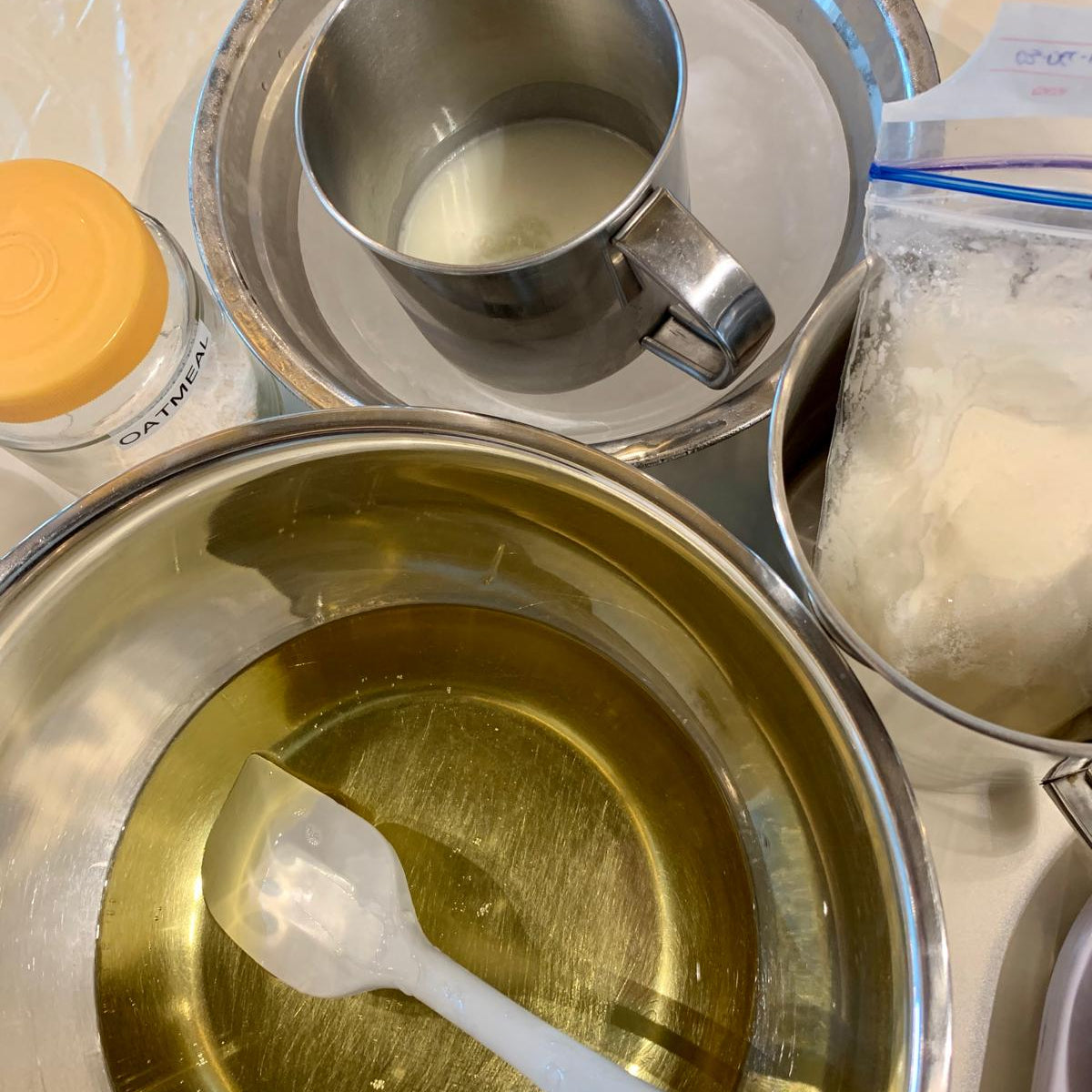
We start with nourishing plant-based oils and butters.
A necessary ingredient that helps turn oils into soap.
Through a natural reaction called saponification, oils and alkali transform into soap.
Glycerin
Naturally formed as a by-product and retained in our soap.
Cold-process soap draws on a time-honoured way of making soap, using simple ingredients and allowing saponification to do the work naturally. With the right formulation, the soap can cleanse effectively while still feeling gentle and considered on skin.
WHAT MAKES UP OUR COLD PROCESS SOAPS?
A short, purposeful ingredient list. Nothing extra. Nothing filler.

✓ No Added Surfactant
✓ No preservatives
✓ No fillers
✓ No synthetic fragrance
✓ No artificial colouring
THE PROCESS TO MAKE OUR SOAPS
Formulate
the recipe
We choose and plan proportions for oils and additives.
Prepare the
ingredients
We measure and prepare all the ingredients.
Blend to
saponify
We blend the oils and sodium hydroxide so soap can form.
Add the
additives
We add selected ingredients such as clays, botanicals, oatmeal or essential oils.
Pour and set
in mould
We pour the soap into moulds and let it set.
Cut and
stamp
We cut the soap into bars and stamp them by hand.
The Cure
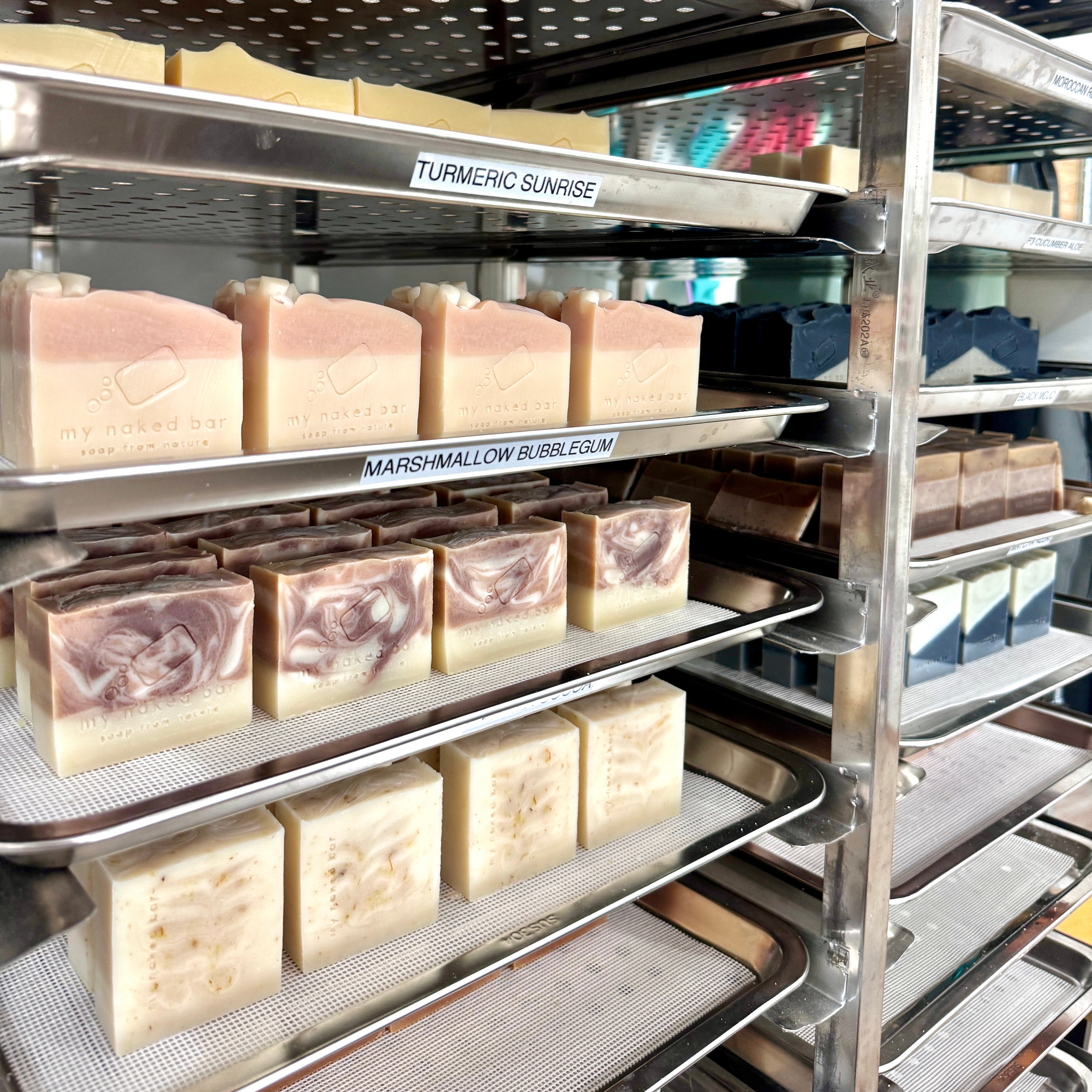
Our soaps are not ready right away. They need time.During curing, excess water gradually leaves the bar and the soap becomes harder.
A harder, well-cured bar lasts longer and wears down more slowly
At My Naked Bar, we give our cold-process soaps at least one month to cure.
THE TWO SURPRISES IN REAL SOAP
Sodium hydroxide goes in.
In its raw, concentrated form, sodium hydroxide is corrosive. So while the name may sound scary to those who recognise it, it is also essential to making a solid bar of soap. There isn’t a substitute for it in this process.
During saponification, sodium hydroxide reacts with the fatty acids in oils to form soap. In a properly formulated finished bar, that raw sodium hydroxide is no longer present as such.
In Singapore, concentrated sodium hydroxide is a controlled hazardous substance. Buying, storing and using it requires an NEA permit tied to approved industrial premises.
Glycerin comes out.
As soap forms, glycerin is naturally created too.
It’s a humectant, which means it helps attract water. It’s commonly added to skincare products for that reason.
In cold-process soap, it forms naturally during saponification
and remains in the finished bar.
We leave it there.