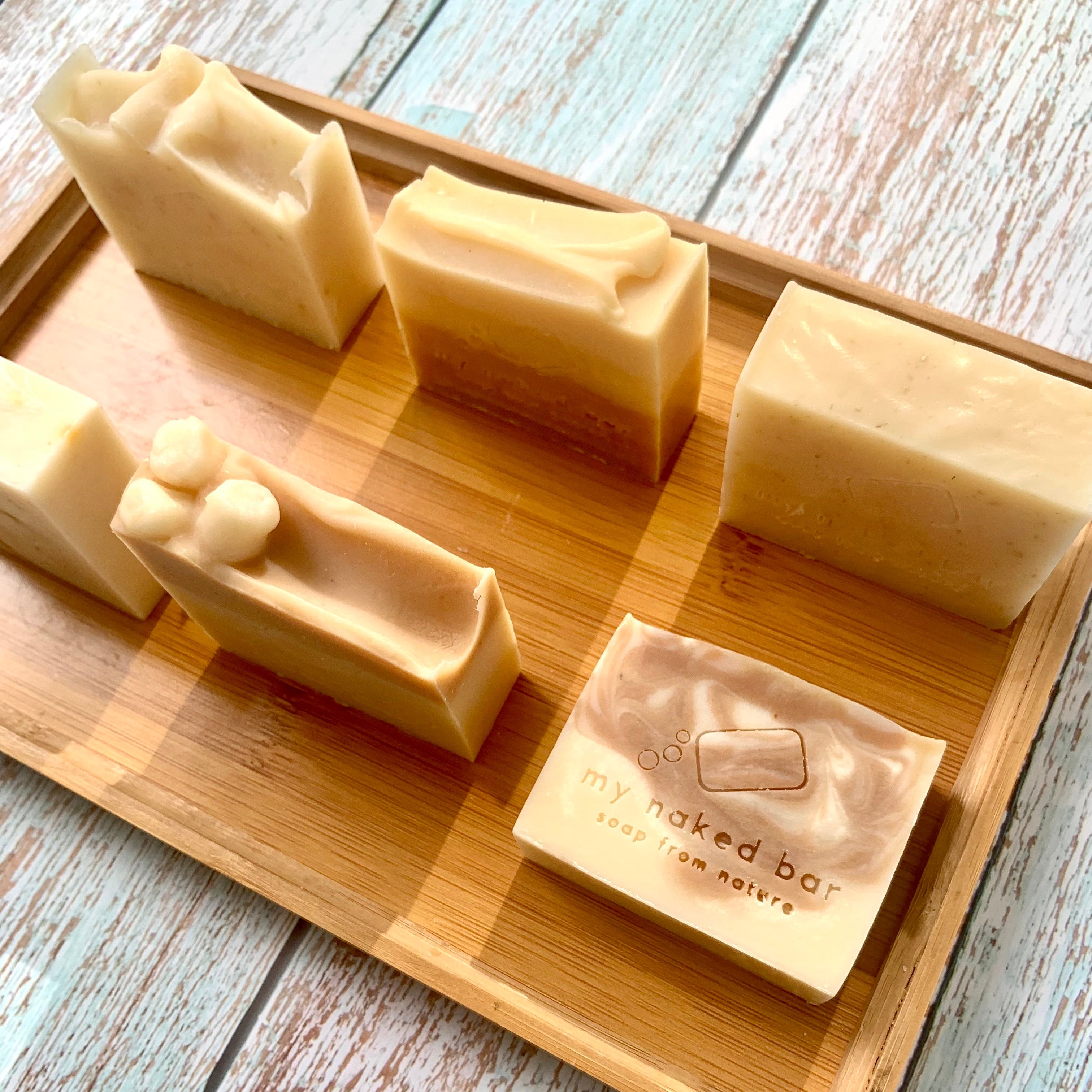
sensitive skin
Eczema-friendly soap bars for sensitive skin and everyday care
For skin that needs more trust before trying something new
The first step matters more than people think
Gentle care starts with the cleanse
Before creams, oils, prescriptions or moisturisers, your skin still has to be washed. If cleansing leaves your skin feeling tight, dry or stripped, everything after has to work harder.
A gentle, well-formulated bar can make a real difference to how your skin feels every day.
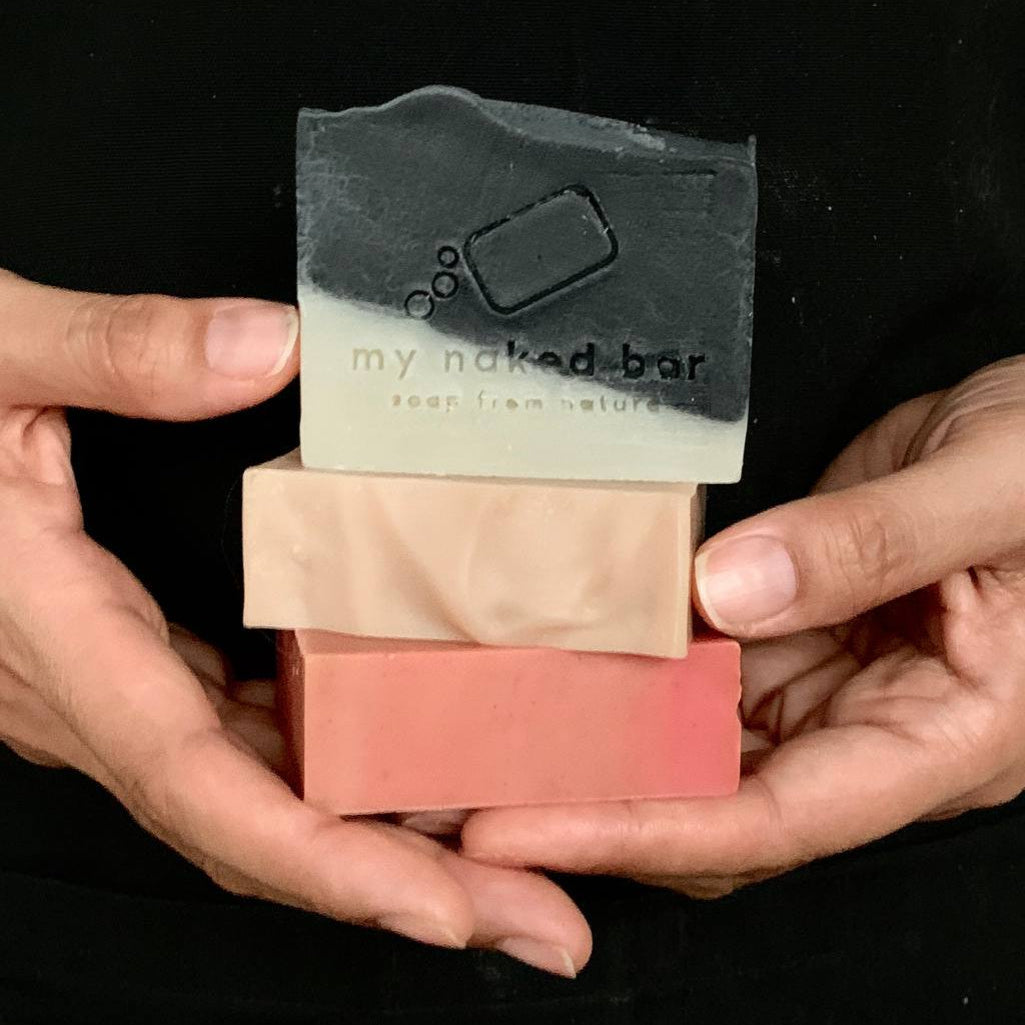
Not all soap bars are made the same
A bar may look simple, but how it is made and how it is formulated can shape the way it cleanses, lathers and feels on your skin.
That is why understanding a little more about bar soap can help you make sense of what you are using and what may suit you better.
If you’re curious about the hows, whys, and little details behind a good bar, we’ve put them together in Soap School.
What we mean by 'eczema-friendly'
Made with eczema-prone and sensitive skin in mind. Honest, careful, and considered.
Naturally formed glycerin stays in the bar
Glycerin is naturally formed during saponification and remains in our cold-process soap, where it helps attract moisture.
We deliberately include more oils
Our recipes are calculated so a small amount of oil remains unsaponified. This is called superfatting and is one of the ways we balance cleansing with how we want the finished bar to feel on skin.
Ingredients are chosen with purpose
Botanicals and other additions are selected for the role they bring to a particular formulation, whether for skin benefits, feel, texture or the overall experience of the bar.
What's in Our Bars
Plant-based oils and butters
Naturally formed glycerin retained
Selected botanicals, clays and minerals (where used)
Essential oils (scented bars only)
No SLS, parabens, phthalates, synthetic fragrance or artificial colouring
"Have been using the amazing bars from My Naked Bar since early days in 2020 when the shopfront was still on Etsy, and never looked back! They were great on eczema skin and even after skin has healed, the family continues to use naked bars on daily basis. We have tried almost all the different flavours (so fun!) and our favourite remains to be the basic oat :)"
Linda W
"But so far my eczema have been good after the switch :) I try to wash my hands with your soap and it help, whenever I use kirirei it dryyyyyy the skin instantly"
Larissa
"It helped clear up my partner’s psoriasis with the Marshmallow Bubblegum, and my friend’s eczema with the Tumeric Sunrise. I would definitely be recommending more to those of my with skin conditions."
Lydia Karini
"It is my honest review that your soaps I used are remarkable and do not irritate the skin or leave it dry. The soap quality is also good & it doesnt loose its shape and form like other soaps I have used"
Diksha
FIND YOUR FIRST BAR
Most customers do not need to start with a bar with no added scent.
If you are new to My Naked Bar and do not have known sensitivity to essential oils, Lavender Oatmeal and Turmeric Sunrise are our usual first choices.
Vanilla Cocoa is a good option for those who want no added scent.

Lavender Oatmeal
GENTLE FIRST CHOICEA gentle, comforting first bar for sensitive skin and everyday showers.
Best for sensitive skin, everyday use, first-time customers, and anyone who likes a soft lavender scent.

Turmeric Sunrise
BRIGHT AND SPA-LIKEA skin-loving favourite for everyday care. Many customers say its warm, spa-like scent feels relaxing.
Best for sensitive skin, everyday use, lightly scented bars, turmeric lovers, and customers who enjoy a warm spa-like shower.

Vanilla Cocoa
NO ADDED SCENTA good choice for people who want no added scent and are sensitive to oats.
Best for scent-sensitive users, customers avoiding oats, and anyone who wants the cautious route without added scent.
Need help?
Frequently Asked Questions
No. Our soaps do not treat, cure, prevent, heal, repair, or medically manage eczema.
What they can do is support the first step of the routine: cleansing.
For eczema-prone and sensitive skin, cleansing matters because it happens before moisturisers, creams, oils, or any topical medication prescribed by a doctor. If the cleanse leaves skin feeling tight, dry, or stripped, the rest of the routine has to work harder.
Our eczema-friendly bars are formulated to cleanse without aiming for that squeaky-clean, over-washed feeling. They are made with naturally retained glycerin and a considered balance of plant oils, including extra oils left in the bar to replenish after cleansing.
So no, this is not an eczema treatment. But for many customers, it is a gentler cleansing step they feel comfortable returning to, especially when used alongside their usual moisturiser or dermatologist-recommended care.
If your skin is currently flaring, broken, highly reactive, or under medical care, patch test first or check with your doctor before introducing anything new.
Not all soap bars behave the same way.
Many people associate soap with that tight, squeaky-clean feeling, where the skin feels almost too clean after washing. That is usually the feeling sensitive-skinned customers are trying to avoid.
Our bars are made differently. They are true cold-process soaps, formulated with plant oils rather than synthetic surfactants. During soapmaking, natural glycerin is formed and retained in the bar. Glycerin is widely used in skincare for its moisturising properties, which is one reason we value this traditional method.
We also formulate our bars with a considered balance of oils, including extra oils left in the bar after soapmaking. That helps the bar cleanse well while leaving skin feeling clean, comfortable, and not overly stripped.
Some first-time customers tell us their skin feels “really clean” at first, especially if they are switching from shower gels that leave a residue-like feel. But many customers also tell us that with continued use, their skin feels smoother and more comfortable over time.
Everyone’s skin is different, especially if it is sensitive or eczema-prone. If you are cautious, start with a gentle first bar and follow with your usual moisturiser or any care routine recommended by your dermatologist.
Glycerin is a humectant, which means it helps attract and hold on to moisture. It is widely added into skincare products for its moisturising properties.
In traditional soapmaking, glycerin is naturally formed when oils are turned into soap. So in a very real sense, handmade cold-process soap is one of the original sources of natural glycerin.
In some commercial soapmaking, glycerin can be separated out and used in other products like skincare, pharmaceuticals, or food processing.
We do things differently. In our cold-process bars, the naturally formed glycerin is retained in the soap.
That matters because cleansing should not just be about washing everything away. For sensitive and eczema-prone skin, we want the cleanse to feel clean, comfortable, and not overly stripped.
So no, we do not need to add glycerin in later. We make soap in a way that naturally creates it, then keeps it where we want it: in the bar.
Sodium hydroxide may sound intimidating, but it is the essential alkali needed to make real soap.
On its own, sodium hydroxide is highly alkaline and corrosive. That is why it must be handled carefully during soapmaking. But in soap, it is not there to sit on your skin as sodium hydroxide.
Its job is to react with oils through a process called saponification. This is what transforms oils into real soap and naturally formed glycerin. Sodium hydroxide produces hard bar soap, while potassium hydroxide is typically used for softer or liquid soaps.
In a well formulated and properly crafted bar, the sodium hydroxide is used up during soapmaking. What remains is not sodium hydroxide, but soap, glycerin, and the carefully chosen oils and ingredients that give the bar its final feel.
So yes, sodium hydroxide is non-negotiable in real bar soap. Without it, oils stay oils. With it, handled properly, a nourishing oil blend becomes a beautiful bar of soap.
No.
Our bars are made with a short, purposeful ingredient list. No surfactants, preservatives, fillers, synthetic fragrance, or artificial colouring.
A real soap bar is made mainly from plant-based oils, water, and sodium hydroxide. Through soapmaking, these transform into soap and naturally formed glycerin.
From there, we may add pure essential oils to scent selected bars, and botanicals, clays, or minerals for their skin benefits and natural character.
Fun fact: the main lathering ingredient in many of our bars is coconut oil that has been transformed into soap through saponification. That is how we build lather without adding separate surfactants.
And because cold-process soap is a solid bar with very little available water after curing, it does not require preservatives the way many water-heavy products do.
Many of our customers have sensitive or eczema-prone skin, and we do have a sizeable group who subscribe to receive their soaps from us every two months. For them, finding a bar they trust enough to keep stocked matters.
That said, every person’s skin is different.
If this is your first time trying cold-process soap, or if you are unsure about specific skin allergies or sensitivities, we recommend patch testing first.
Use the soap on a small area, rinse well, and observe how your skin responds before using it more widely.
If your skin is currently flaring, broken, highly reactive, or under medical care, check with your doctor before introducing anything new.