Soap school
Not All Soap Bars Are Made the Same
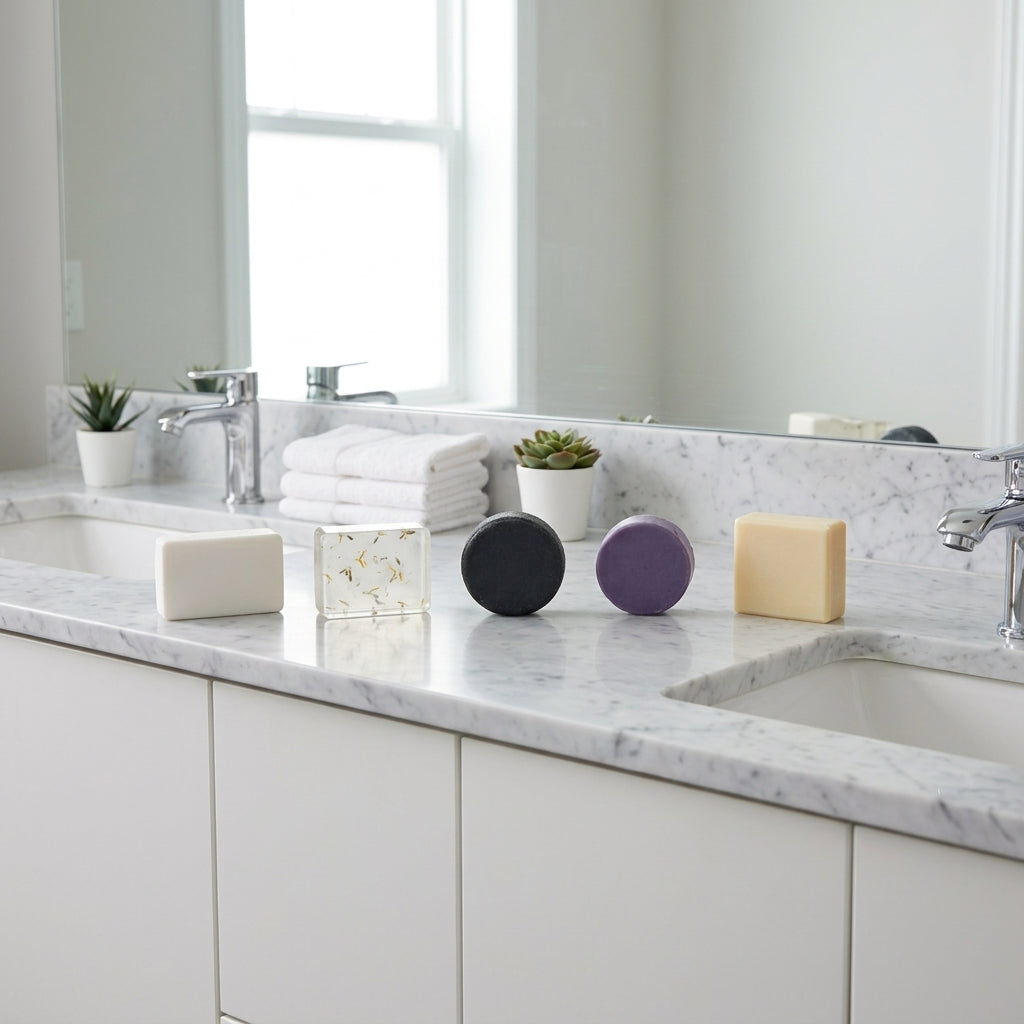
A bar tells you the form. It doesn't tell you what it's made from, how it was made, or how it will feel on your skin.
A bar is a format, not a formulation.
That means two products that look almost identical sitting in the bathroom can actually be very different once you look at what's inside.
So what kinds of soap bars are there?
Here are a few broad types you're likely to come across
Syndet Bars
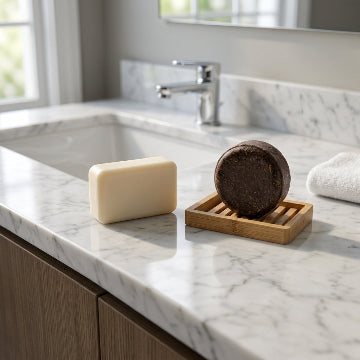
Syndet stands for synthetic detergent.
Think of shower gel or shampoo, but in a solid bar format. Instead of soap formed through saponification, syndet bars use surfactants as their main cleansing agents.
They may also contain water, humectants, emollients, binders, fragrance and other functional ingredients. Depending on the formulation and water content, preservatives may also be needed.
Most solid shampoo bars are made this way.
Because syndets are technically not soaps, they are also sometimes called soap-free bars, cleansing bars or beauty bars.
Melt-and-pour soap
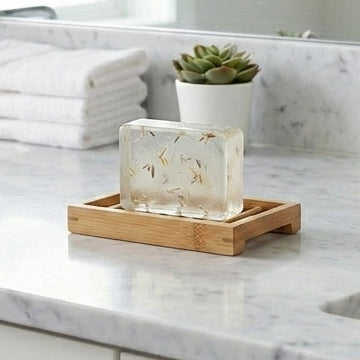
Melt-and-pour soap is also sometimes called glycerin soap. These soaps start with a ready-made soap base.
The maker melts that base, then may add colours, scents, botanicals or other ingredients before pouring it into moulds.
Because the soap itself has already been made, there is no need to handle sodium hydroxide at this stage, and the bars generally do not need the same curing period as cold-process soap.
To make the base easy to melt, pour and set again, melt-and-pour formulations usually include additional ingredients such as solvents or humectants that help give the base those remelting properties.
That makes melt-and-pour practical for workshops and quick-turnaround soapmaking.
The trade-off is less control over the base formulation. The oils and other ingredients in the base were already decided by its manufacturer, so the maker is mainly customising what gets added afterwards.
Traditional Soaps Made From Scratch
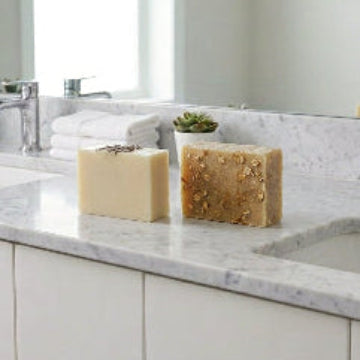
Cold-process and hot-process soaps are made from scratch by combining oils or fats with an alkali such as sodium hydroxide.
Soapmakers can select and formulate the proportions of different oils themselves, or work from established soap recipes, depending on the characteristics they want in the finished bar.
Through a chemical reaction called saponification, the oils and sodium hydroxide are transformed into soap, with glycerin naturally formed along the way.
Hot process adds external heat to accelerate saponification and can shorten the time needed before the bar is ready for use.
Cold process lets the heat naturally generated during saponification carry the process through and generally requires a curing period of at least about four weeks.
Understand the craft and what goes in
Handmade doesn’t automatically mean cold process
This is where the labels can get confusing.
A soap can be handmade using melt-and-pour, cold process, hot process or other soapmaking techniques.
So when you see the word handmade, it tells you something about how involved the maker was in creating the finished product. It does not, by itself, tell you which soapmaking method was used.
And that matters because the method is only one part of the story.
Even within the same type, formulations differ
For example, two cold-process soaps can both be made from scratch and still be completely different formulations.
The maker can choose different oils and fats, use them in different proportions, vary the amount of oils left unsaponified, make the bar scented or unscented, and add ingredients such as oatmeal, clay, charcoal, salt, botanicals or milks.
Those choices can affect things like how hard the bar becomes, how it lathers, how quickly it wears down and how it feels during and after cleansing.
Same method does not mean same bar.
See why formulation choices matter
One bar doesn’t define the whole category
Maybe you used a soap bar years ago and remember your skin feeling tight.
Maybe you tried a handmade bar once and it melted quickly.
Or maybe you simply decided somewhere along the way that bar soap wasn’t really your thing.
That experience was real. But it was an experience with that particular bar, formulation and way of using it.
It doesn’t necessarily tell you what another bar will feel like.
So if you’ve written off soap bars altogether before, it may be worth trying again with a better understanding of what kind of bar you’re choosing and how to use it well. You may have a very different experience this time.